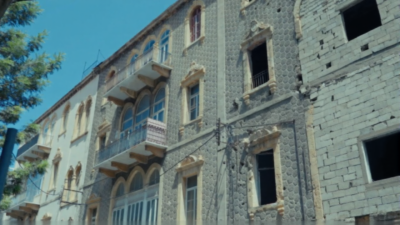
When we picture our dream home, we often imagine the traditional Lebanese house — built with stone and crowned with its iconic red-tiled roof, inspired by Emir Bashir II Chehab’s admiration for Marseille.
It was designed as a home that brought families together, with its arches, decorative details, and distinctive windows, surrounded by lemon and olive trees and the jasmine of the courtyard.
Today, however, the traditional Lebanese house is at risk of disappearing due to wars, government neglect, gaps in the country’s outdated heritage protection law dating back to the French Mandate, and the limited budget allocated to the Ministry of Culture.
The explosions that devastated historic neighborhoods such as Mar Mikhael and Gemmayzeh, along with the most recent war, caused extensive damage to houses that are more than a century old. In many cases, their contents were lost, while some buildings were never fully documented.
Preserving the Lebanese house must be an essential part of reconstruction plans, amid concerns that the country’s distinctive architectural style may not be taken into consideration.
A joint study involving France, Spain, and Lebanon has also warned that the traditional skills of stone masons and craftsmen are increasingly at risk of disappearing.
Protecting this heritage requires greater public awareness and the creation of specialized centers dedicated to Lebanese architecture. Because restoring a Lebanese house goes far beyond repairing its stones — it means preserving a living part of our history and identity.