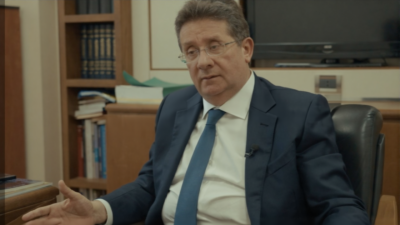
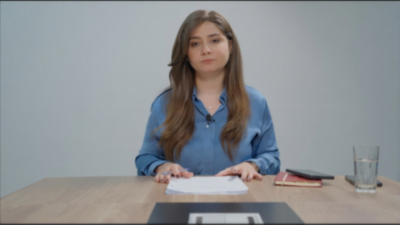
This special episode of “Solb Al Mawdouh” on The Speech examines several major political and security issues with former Interior Minister Brigadier General Marwan Charbel.
The discussion covers the Abra clashes, Lebanon’s prison crisis, and the controversy surrounding singer Fadel Shaker and his alleged involvement in the events.
Charbel discussed the difficult conditions and overcrowding at Roumieh Prison.
He criticized the delays in building new prisons and said that general amnesty laws are often affected by sectarian and political disputes.
He also pointed to the lengthy judicial delays in issuing verdicts for detainees.
The interview also addressed the Abra events.
Charbel denied having any personal relationship with Sheikh Ahmad al-Assir. He explained that the removal of the tents at the time was carried out in accordance with a Council of Ministers decision, with the aim of preventing further tensions.
He also argued that al-Asir’s name was later used politically in ways that complicated discussions surrounding general amnesty laws.
The interview then turned to singer Fadel Shaker.
Charbel said that, according to statements by officers who were present on the ground, his direct involvement in fighting the Lebanese Army had not been established.
He added that Shaker’s departure took place through a legal and judicial process and under certain guarantees.
At the same time, Charbel noted that Shaker’s rapid return to mainstream public performances in Lebanon would be difficult because of the sensitivity of the issue and its place in the public memory.
Charbel also criticized the political system and what he described as the absence of genuine reforms.
The discussion touched on the banking deposit crisis and the impact of Lebanon’s financial collapse on the country’s security and military institutions.
The interview also examined Charbel’s perspective on the broader regional and international situation.
Overall, the episode provides Charbel’s perspective on Lebanon’s security challenges, political disputes, judicial delays, and the consequences of the country’s prolonged financial and institutional crisis.